
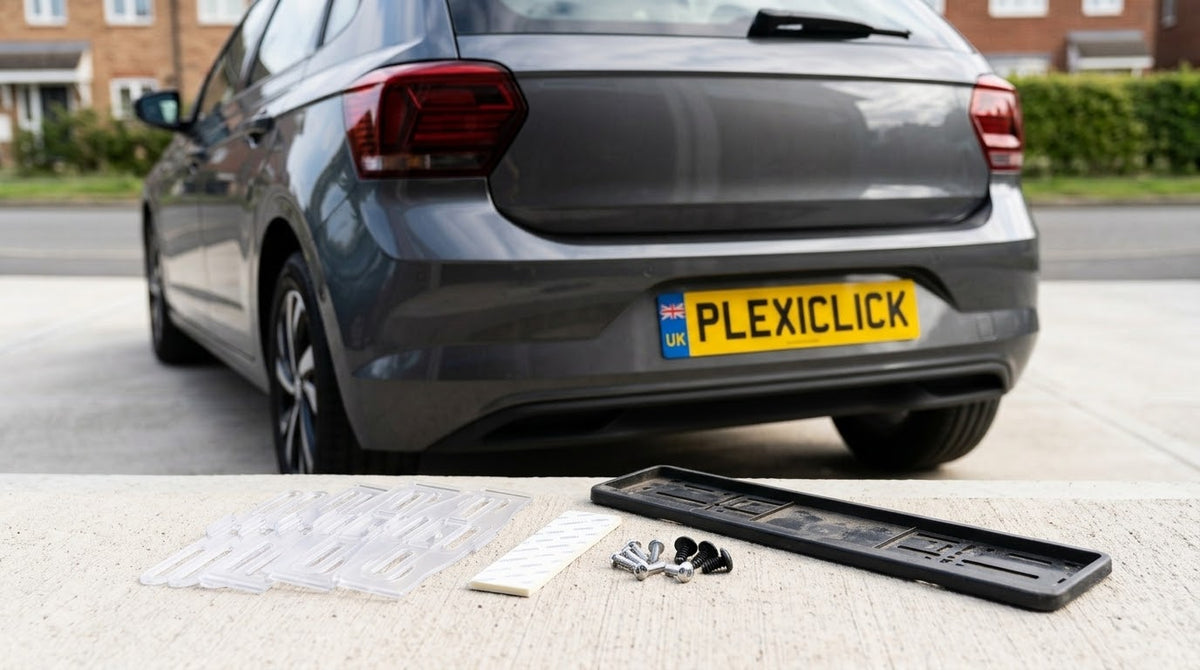
There are four common ways to mount a number plate on a car in the UK. Each has its pros and cons – for looks, security and your paintwork. Here is a quick comparison to help you choose.
1. Sticky pads
Double-sided adhesive pads are cheap and quick to fit.
- Pros: inexpensive, no visible screws.
- Cons: grip can weaken with heat, frost, rain and pressure washers; residue is hard to remove; the plate cannot be taken off and refitted easily.
2. Screws through the plate
The traditional method: screws go straight through the acrylic plate into the car.
- Pros: very secure.
- Cons: the plate has to be drilled, which can crack it; screw heads are visible on the front; new holes may be needed in the bumper.
3. Number plate surround (frame)
A plastic frame that holds the plate around the edges – often supplied by the dealer with their branding.
- Pros: uses the existing mounting points, easy to change plates.
- Cons: covers the edge of the plate where the supplier details and BS AU 145e mark are printed; usually carries dealer advertising; can look bulky.
4. Clip number plate holder
Small clips are screwed to the existing mounting points and hold the plate from behind. One example is the PLEXICLICK® number plate holder.
- Pros: invisible from the front, advert-free, no drilling, plate clicks in securely and can be removed again, also fits short plates.
- Cons: must match the height and thickness of your plate – so measure before you buy.
Comparison at a glance
| Sticky pads | Screws | Surround | Clip holder | |
|---|---|---|---|---|
| Holds securely | Varies | Yes | Yes | Yes |
| No drilling | Yes | No | Yes | Yes |
| Clean look | Yes | No | No | Yes |
| Markings stay visible | Yes | Yes | Often not | Yes |
| Plate removable | No | Yes | Yes | Yes |
Which is best?
If you want a secure plate, a clean look and no new holes, a clip number plate holder combines the advantages of the other methods. Sticky pads are fine as a temporary solution, and screws through the plate are secure but leave visible screw heads.
Before you buy, check the height and thickness of your plate with our size guide. For fitting tips, read how to fit a number plate without drilling, and for the legal side, see our UK number plate rules guide.

Leave a comment
This site is protected by hCaptcha and the hCaptcha Privacy Policy and Terms of Service apply.